Diet, Lifestyle, and Prevention: Breast Health Tips for Indian Women
Learn how diet, lifestyle changes, and early habits support the prevention of breast cancer in Indian women. Practical breast health tips from Panacea Clinic.
Yesterday I was passing near a college and I saw a group of students vaping near the campus. Probably one of them was reluctant to smoke, but others were urging him, “Bhai ye smoking nahi hai. Vaping dangerous nahi hota. Enjoy kar.”
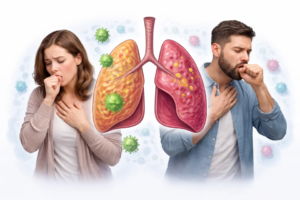
At that very moment, I made up my mind that it was necessary to clear certain myths and facts about smoking and vaping. As a pulmonologist who treats lung diseases daily, I want to address the most dangerous misconceptions I’m seeing spread among young people and adults alike.
The Fact: This is one of the most dangerous misconceptions I encounter. Even smoking a few cigarettes a day or smoking occasionally increases the risk of lung cancer. There is no safe level of cigarette smoking.
People who smoke cigarettes are 15 to 30 times more likely to get lung cancer or die from lung cancer than people who do not smoke.
What’s more concerning is that the more years a person smokes and the more cigarettes smoked each day, the higher the risk goes up.
In my practice, I’ve seen non-smokers diagnosed with lung cancer, but the statistics are clear: cigarette smoking is linked to about 80% to 90% of lung cancer deaths in the United States. The reality is that every cigarette you smoke causes damage to your lungs.
The Fact: I wish this were true, but it’s far from reality. Vaping involves inhaling aerosolised liquid containing various chemicals, and we’re still learning about its long-term effects.
While vapour from e-cigarettes seems to be less harmful than tobacco smoking, the long-term health effects of vaping aren’t yet known. This uncertainty should concern us all, especially parents of teenagers.
What worries me most is that vape products are not as regulated by the Food and Drug Administration, meaning users often don’t know exactly what they’re inhaling or how much nicotine they’re consuming.
I’ve treated patients with EVALI (e-cigarette or vaping use-associated lung injury), a serious condition that hospitalised thousands of people in 2019.
Recent research has revealed something particularly alarming: people who both vape and smoke are four times more likely to develop lung cancer than people who just smoke. This suggests that using both products together creates a compounding risk that’s worse than either habit alone.
The Fact: While vaping may deliver fewer harmful chemicals than traditional cigarettes, it’s not a safe alternative, and it’s not approved as a smoking cessation tool.
Many vape products contain nicotine, which is incredibly addictive. My concern is that we may be creating a new generation of nicotine addicts who could eventually transition to cigarettes as vaping becomes more regulated.
Moreover, ex-cigarette smokers who had quit five years or more and used e-cigarettes were at greater risk of lung cancer-related death than ex-smokers who had quit five years or more without vaping.
This suggests that picking up vaping after quitting smoking may undermine the health benefits of quitting.
If you’re trying to quit smoking, please talk to me or your doctor about evidence-based cessation methods like nicotine replacement therapy, prescription medications, or counselling programs.
The Fact: While smoking is the leading cause of lung cancer, non-smokers can and do develop this disease. I’ve had to deliver this difficult diagnosis to patients who never touched a cigarette in their lives.
Several factors can increase lung cancer risk in non-smokers:
Secondhand Smoke: Nonsmokers exposed to secondhand smoke at home or work have a 20 per cent to 30 per cent greater risk of lung cancer compared to those who haven’t been exposed. Smoke from other people’s cigarettes, pipes, or cigars also causes lung cancer.
Radon Exposure: Indoor radon is another significant cause of lung cancer. It is a naturally occurring gas that forms in rocks, soil, and water, which cannot be seen, tasted, or smelled.
When radon accumulates in homes or buildings, prolonged exposure can cause lung cancer. I always recommend that my patients test their homes for radon, especially in Nagpur, where construction materials and soil composition vary.
Occupational Exposures: Substances found at some workplaces that increase risk include asbestos, arsenic, diesel exhaust, and some forms of silica and chromium.
Air Pollution: Living in areas with higher levels of air pollution also increases lung cancer risk, which is particularly relevant for urban populations.
The Fact: This defeatist attitude prevents many of my patients from taking the most important step they can for their health. It’s never too late to quit.
People who quit smoking have a lower risk of lung cancer than if they had continued to smoke. Quitting smoking at any age can lower the risk of lung cancer.
The body has remarkable healing capabilities. Within months of quitting, your lung function begins to improve. Within a few years, your risk of lung cancer starts to decline, although it remains higher than that of someone who never smoked.
The benefits extend beyond cancer risk. Quitting improves your cardiovascular health, lung function, energy levels, and even your sense of taste and smell. Your family also benefits from reduced secondhand smoke exposure.
The Fact: While lung cancer screening is valuable for high-risk individuals, it’s not a substitute for prevention. Screening can detect cancer earlier when it’s more treatable, but preventing cancer in the first place is always better than finding it early.
Cigarette smoking can cause cancer almost anywhere in the body, including the mouth and throat, esophagus, stomach, colon, rectum, liver, pancreas, voice box, trachea, bronchus, kidney, urinary bladder, cervix, and acute myeloid leukaemia. So even with lung cancer screening, you’re still at risk for numerous other cancers and health conditions.
That said, if you’re 50 years or older with a significant smoking history, talk to me about whether lung cancer screening with a low-dose CT scan is appropriate for you.
The Fact: The word “natural” doesn’t mean safe. Using other tobacco products, such as cigars or pipes, also increases the risk for lung cancer. Any product that involves inhaling smoke delivers harmful substances into your lungs.
Herbal cigarettes, bidis, and other alternative tobacco products still produce combustion, creating toxic chemicals and particulates that damage lung tissue. The act of inhaling smoke itself is harmful, regardless of what you’re burning.
If you currently smoke or vape, the best decision you can make for your lung health is to quit. I know this is incredibly difficult. Nicotine is one of the most addictive substances we know. But as your doctor, I’m here to support you through this process.
If you don’t smoke or vape, don’t start. If you have children or teenagers, talk to them about the risks. The teenage brain is particularly vulnerable to nicotine addiction, and what seems like harmless experimentation can lead to a lifelong struggle.
For everyone, I recommend:
If you have concerns about your lung health or smoking history, please schedule an appointment. Early detection and intervention can make a significant difference in outcomes. Together, we can develop a personalised plan to protect your respiratory health for years to come.
Our lungs have an incredible capacity to heal, but they need you to give them a chance. The best time to quit was when you started. The second-best time is right now.

Learn how diet, lifestyle changes, and early habits support the prevention of breast cancer in Indian women. Practical breast health tips from Panacea Clinic.

Namaste, Last Tuesday, I met Priya in my clinic. She’s 32, works in IT, newly married, and was holding a report that had just turned

Yesterday I was passing near a college and I saw a group of students vaping near the campus. Probably one of them was reluctant to

As women, we notice changes in our breasts and get worried about them. With so much information available online, we try to diagnose ourselves and

Namaste,I’m Dr. Arundhati Marathe Lote, a breast cancer surgeon. But before anything else, I’m a woman, just like you. And today, I want to talk

As a chest specialist practising in Nagpur for over twelve years, I have had the privilege of helping hundreds of families understand pulmonary fibrosis treatment.